The Pull Out Method is a Gamble
How likely is withdrawal to fail, and how much does a condom actually change that? Here are the published figures for every common method, side by side, with what to do if something has already gone wrong.
📐 How to Read These Numbers
Every figure on this page is a per-year rate for couples relying on that method — not a per-attempt chance. "20 in 100" means that out of 100 couples using withdrawal as their only method for a year, about 20 will have a pregnancy. Most individual acts don't result in conception; the risk accumulates over months.
Typical use means real people with real inconsistency — a late application, a missed pill, a moment of poor timing. Perfect use means the method used correctly every single time without exception. The gap between the two columns is almost entirely human, which is why the easier a method is to use correctly, the closer its two numbers sit.
No method except abstinence reaches zero. What the table below shows is how much each one reduces the risk, and which of them do anything at all about infections.
Every Method, Side by Side
Pregnancies per 100 couples in the first year of use. "Typical" means real people; "perfect" means every time, correctly, without exception.
| Method | Typical use | Perfect use | Protects against STIs? |
|---|---|---|---|
| No method at all | ~85 | ~85 | No |
| Withdrawal (pull-out) | ~20 | ~4 | No |
| Male condom | ~13 | ~2 | Yes — the only one here that does |
| Female condom | ~21 | ~5 | Yes |
| Combined pill | ~7 | ~0.3 | No |
| Copper IUD | ~0.8 | ~0.6 | No |
| Hormonal IUD / implant | ~0.1–0.4 | ~0.1–0.4 | No |
| Condom + another method | very low | very low | Yes |
Figures are the widely cited ranges used by major public-health bodies; they vary a little between sources and study populations. Use them to compare methods against each other rather than as precise predictions for any one couple.

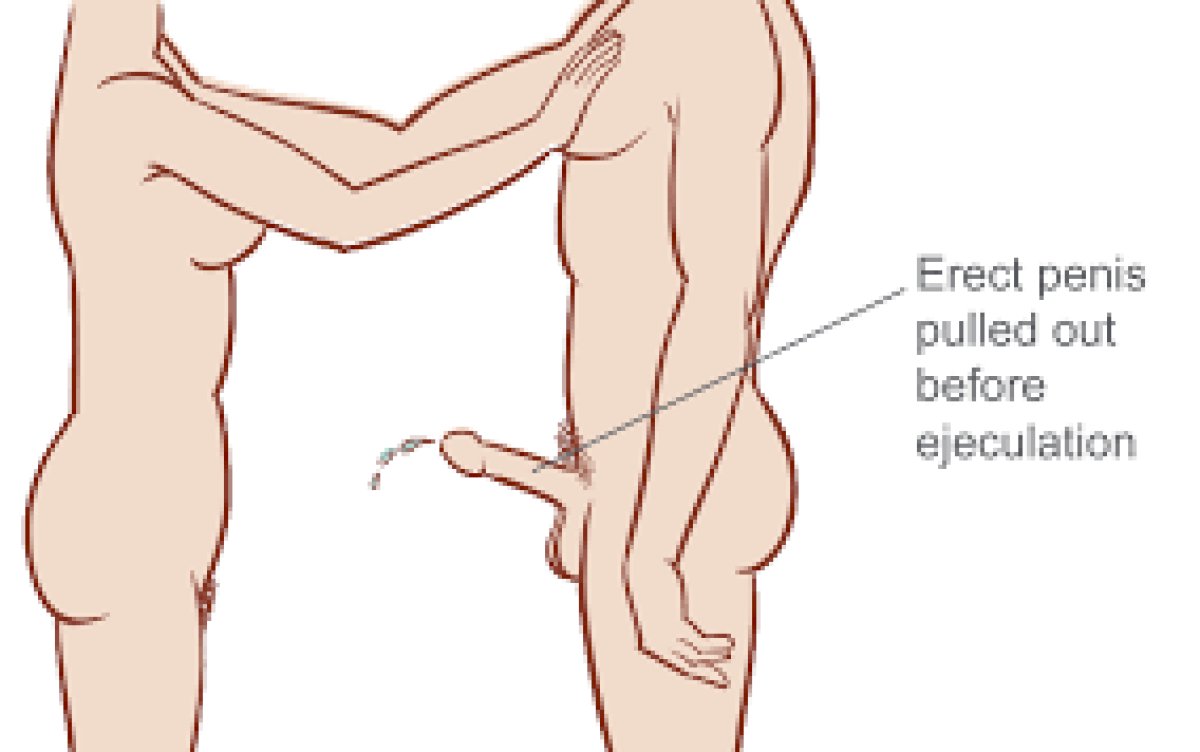
Why Withdrawal Fails Even When the Timing Is Perfect
The usual explanation is reflexes — that no one can time it reliably. That's part of it, but it isn't the main mechanism.
Pre-ejaculate can contain sperm. Studies examining pre-ejaculate samples have repeatedly found motile sperm in a substantial minority of men. Some men have it, some don't, and there is no way to know which you are without laboratory testing. For those men, withdrawal can fail perfectly executed — the fluid is released involuntarily, well before ejaculation, with no sensation to signal it.
Two other failure modes worth naming: ejaculation near the vulva rather than fully away still carries risk, and a second round without urinating in between can leave sperm in the urethra from the first. Neither is intuitive, and both are common.
The Part Withdrawal Does Nothing About
Sexually transmitted infections transmit through skin contact and fluid exchange during the whole encounter, not at the moment of ejaculation. Withdrawal offers essentially zero protection. Chlamydia and gonorrhoea are frequently symptom-free — particularly in women, where untreated infection is a leading preventable cause of infertility in India — so "we're both fine" is not information unless you've both been tested.
Condoms reduce but don't eliminate this either: herpes and HPV spread through skin-to-skin contact in areas a condom doesn't cover. Testing before dropping barriers with a new partner is the only thing that actually closes the gap.
If It's Already Happened — The Emergency Window
Sooner is dramatically better than later. Every option below is more effective on day one than on day three.
Emergency pills are exactly that — emergencies. They're less effective than any regular method and they aren't designed for repeated use. If you're reaching for one more than occasionally, that's a signal to change the regular method rather than the backup.
If the Real Objection Is Sensation
Most people who use withdrawal aren't confused about the risk — they've decided the trade-off is worth it. Which means the useful response isn't a lecture, it's addressing the actual complaint.
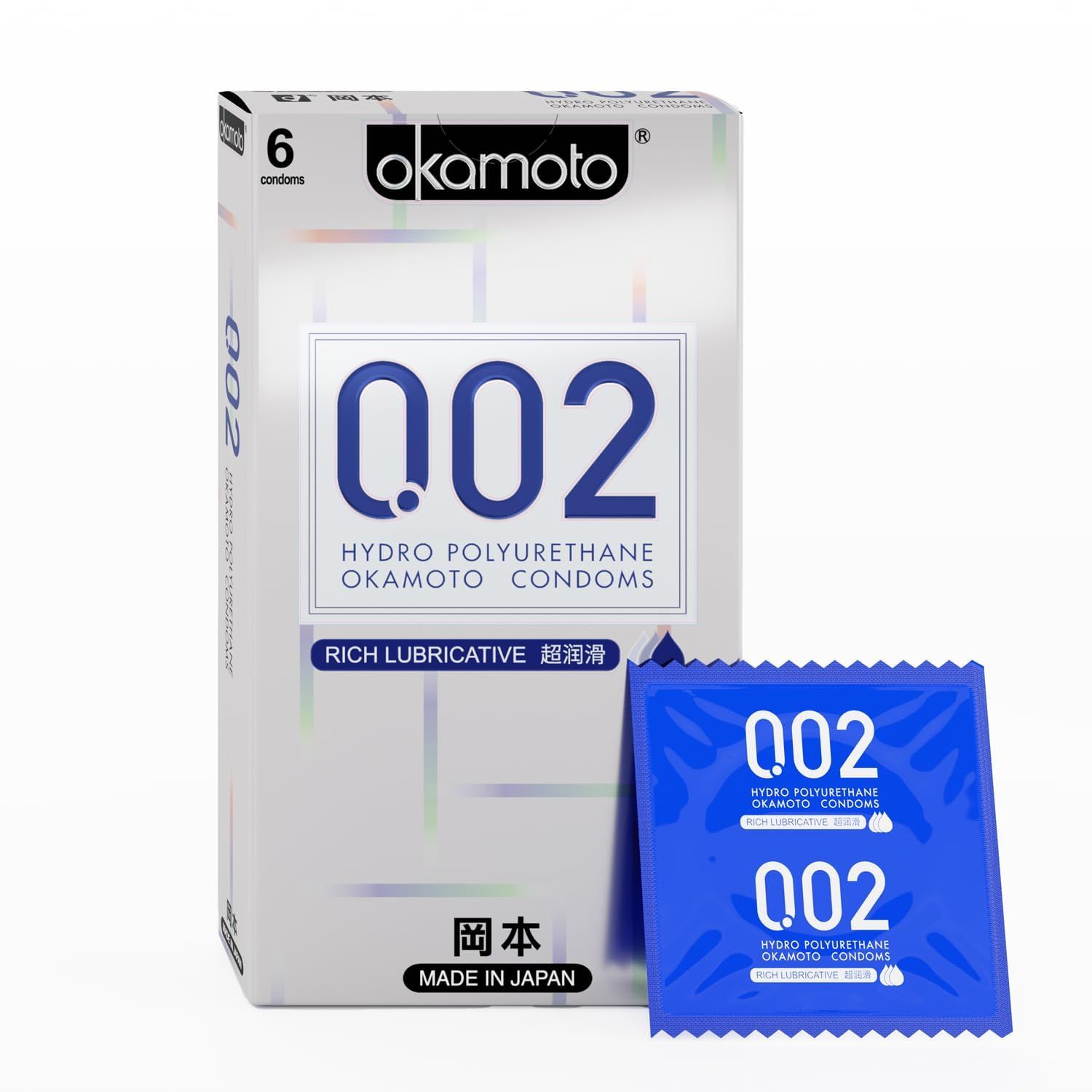
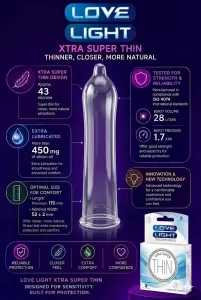
Standard condoms are around 0.07mm. Ultra-thins run 0.05mm down to 0.02mm. That's a genuinely different experience, not marketing — and if someone last tried a condom years ago from a chemist's bottom shelf, they're comparing against something that no longer represents the category. Add a water-based lubricant and the difference is larger still; friction is also the main cause of breakage, so it improves reliability at the same time.
If the objection is timing rather than sensation — pulling out because finishing too early is the worry — delay variants address that directly and remove the reason for the manoeuvre entirely.
What Actually Solves It


Shop by Category


The Short Version
Over a year of relying on withdrawal alone, roughly 1 in 5 couples will have a pregnancy. Condoms bring that to around 1 in 8 with typical use and 1 in 50 when used correctly every time — and they remain the only method on this page that reduces STI transmission. Neither reaches zero, and the distance between typical and perfect use is where almost all the difference lives: right size, lubricated, on before any contact, never reused. If sensation is the sticking point, 0.02mm exists. If timing is, delay variants exist. And if something has already gone wrong, the pharmacy is open and the first 24 hours matter most.
Explore More Guides
Condom Size Guide · UltraThin Condoms · Pregnancy Test Kits · Contraceptive Pills · Size & Technique · Love & Intimacy Dictionary · All About Condoms · Sexual Health · How-To Guides · Condom Finder Quiz
Frequently Asked Questions
How effective is the pull-out method really?
With typical use — real couples, real mistakes — roughly 20 to 22 in every 100 couples relying on withdrawal alone will have a pregnancy within a year. With perfect use, every single time, it's around 4 in 100. That makes it meaningfully better than nothing and meaningfully worse than almost everything else.
Does pre-ejaculate contain sperm?
Sometimes. Studies examining pre-ejaculate have found motile sperm in a substantial minority of men. The consistent finding across studies is that some men have sperm present and others don't — and there is no way to know which you are without testing. This is the main reason withdrawal fails even when the timing is perfect.
Are condoms 100% effective?
No. With typical use about 13 in 100 couples relying on condoms alone will have a pregnancy within a year; with perfect use it's about 2 in 100. Most of that gap is user error — wrong size, no lubricant, putting it on late, or reusing one. Condoms are excellent, and they're the only common method that also reduces STI transmission. They are not a guarantee.
Can you catch an STI from withdrawal?
Yes. Withdrawal offers essentially no protection, because transmission happens through skin contact and fluid exchange throughout intercourse rather than only at ejaculation. Herpes and HPV in particular spread through skin-to-skin contact in areas a condom doesn't cover — which is why condoms reduce rather than eliminate that risk too.
What's the emergency contraception window in India?
Levonorgestrel pills (i-pill, Unwanted 72 and others) are available over the counter and work best within 72 hours, with effectiveness falling sharply each day. Ulipristal acetate stays effective up to 120 hours where available. A copper IUD fitted within five days is the most effective option of all and can then be kept as ongoing contraception. Emergency pills are for emergencies — less effective than regular methods, and not a routine plan.
What should we use instead?
If the objection to condoms is sensation, ultra-thin options at 0.02mm to 0.05mm are a genuinely different experience from standard ones. If it's timing anxiety, delay variants address that directly. If you want the lowest failure rates available, long-acting methods like an IUD or implant outperform everything else — worth a conversation with a gynaecologist, and they pair well with condoms for STI protection.
Is delivery from Condombazaar discreet?
Completely. Every order ships in plain, unmarked packaging with sender name CA Gain Healthcare — no product name or brand visible anywhere on the box. Delivering privately across India since 2010.
Related Guides
Was this guide useful? Share it: