Last Longer in Bed with a Little Knowledge
Eight approaches, graded by how much evidence actually sits behind them — starting with the two techniques that work and ending with the situations where a doctor beats another purchase.
First, What Normal Actually Looks Like
Almost everyone asking this question is measuring themselves against a number that came from somewhere other than research. Here's where the actual figures sit.
Two things follow from those numbers. If you're at five minutes, you are average, not deficient. And if you're genuinely under a minute and distressed by it, that's a recognised condition with effective treatments rather than a character flaw.
Products buy you minutes. Technique changes the baseline.
Delay condoms and sprays work — modestly, immediately, every time you use one. The stop–start technique and pelvic floor training work differently: slowly, over weeks, and then permanently.
The sensible approach uses both. Products for tonight, training for the next six weeks, and the training is the part that means you eventually need the products less.
The Eight Methods
Graded by evidence: Strong means good clinical support, Good means sound mechanism with reasonable backing, Practical means it works but is a tool rather than a treatment.
The oldest and best-evidenced behavioural method there is. The principle: learn to recognise the point just before ejaculation becomes inevitable, and stop there. Repeated over weeks, this builds genuine awareness of your own arousal ladder rather than only its top rung.
It works because premature ejaculation is largely a recognition problem — most men can identify 'about to' but not the several steps leading up to it. Training closes that gap.
- Begin alone, without a partner. Stimulate until you're close to the point of no return, then stop completely.
- Wait 30 seconds until the urgency fades, then resume.
- Repeat three times. On the fourth, allow yourself to finish.
- Do this two or three times a week for several weeks before bringing it into partnered sex.
- In partnered sex, the same pattern applies — pause, let it subside, resume. Tell your partner what you're doing so the pause reads as technique rather than a problem.
A variation developed as part of formal sex therapy. Where stop–start uses time, this uses pressure — firm compression just below the head of the penis, held for several seconds, which reduces arousal quickly enough to continue.
Some men find it more reliable than stopping; others find it interrupts the moment more. Both are reasonable, and it's worth trying each to see which suits you.
- Stimulate until you're approaching the point of inevitability.
- Squeeze firmly where the head meets the shaft, thumb on one side and two fingers on the other.
- Hold for about 10 to 20 seconds, until the urge passes.
- Wait a further 30 seconds before resuming.
- A partner can apply it too, which many couples find works better than doing it yourself.
The most under-used item on this list, and one with real trial evidence behind it. The same muscles that stop urine mid-flow are involved in the ejaculatory reflex, and strengthening them measurably improves control for many men with lifelong premature ejaculation.
It takes weeks rather than days — this is training, not a trick — but it's free, invisible, and requires nothing but consistency.
- Identify the muscle: the one you'd use to stop urinating mid-stream, or to lift the testicles without moving anything else.
- Contract for 3 seconds, relax for 3 seconds. That's one repetition.
- Do 10 repetitions, three times a day.
- Build toward holding for 10 seconds as strength improves.
- Keep breathing normally, and don't clench the buttocks, thighs or stomach — those are the wrong muscles.
Some positions are simply harder to last in. Anything where you're supporting your own weight and thrusting deeply — kneeling, standing, most of the rear-entry family — combines muscular tension with rapid stimulation, which shortens things considerably.
Positions where she controls the pace hand the rhythm to someone whose arousal isn't approaching the same threshold, and shallow, rocking positions generate far less stimulation per minute than deep thrusting does.
- Move to a seated or woman-on-top position when you feel yourself climbing.
- Favour rocking over thrusting — the motion matters more than the speed.
- Shallow strokes at the entrance, which is also where most of her nerve endings are.
- Stop to change position entirely; the transition itself is a built-in pause.
Extended foreplay and oral sex do two things at once — they arouse your partner well ahead of you, and they spend time without spending your own arousal.
The practical effect is that by the time intercourse begins, the gap between where she is and where you are has narrowed considerably, so 'lasting longer' matters less than it did.
- Spend genuinely longer on kissing, touching and oral than feels necessary.
- Let her reach orgasm before intercourse begins if that's how her body works — for most women it's the more reliable route anyway.
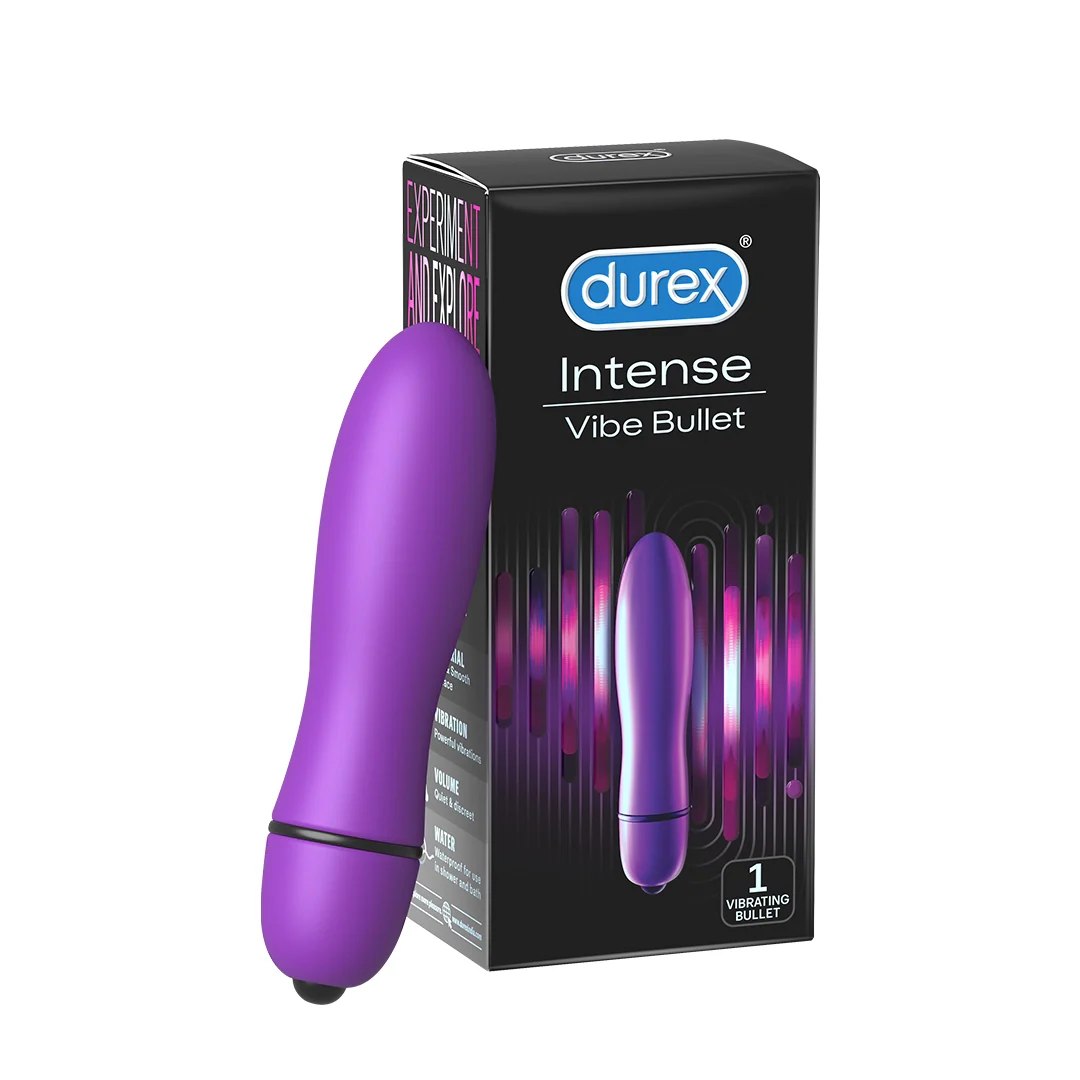
- Use your hands and a toy alongside, so the pressure doesn't rest entirely on intercourse.
- Treat intercourse as one part of the evening rather than the event itself.
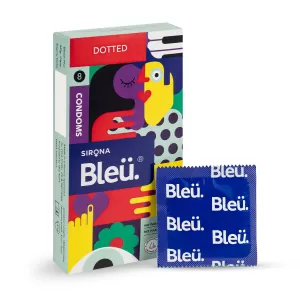
Two different mechanisms, often confused. Delay condoms carry a small amount of benzocaine — a mild local anaesthetic — in the tip, which reduces sensation slightly. Thicker condoms use no anaesthetic at all and work purely by reducing friction.
Both help, and neither is dramatic. The advantage of the condom route over sprays is that the anaesthetic stays contained rather than transferring to your partner.
- Put it on as normal — the anaesthetic sits inside the tip and needs a minute or two to take effect.
- Wait roughly 2 to 3 minutes before penetration so it has time to work.
- If sensation drops more than you'd like, switch to a thicker non-anaesthetic condom instead.
- Anyone with a latex allergy should use a non-latex option; benzocaine sensitivity is uncommon but real.
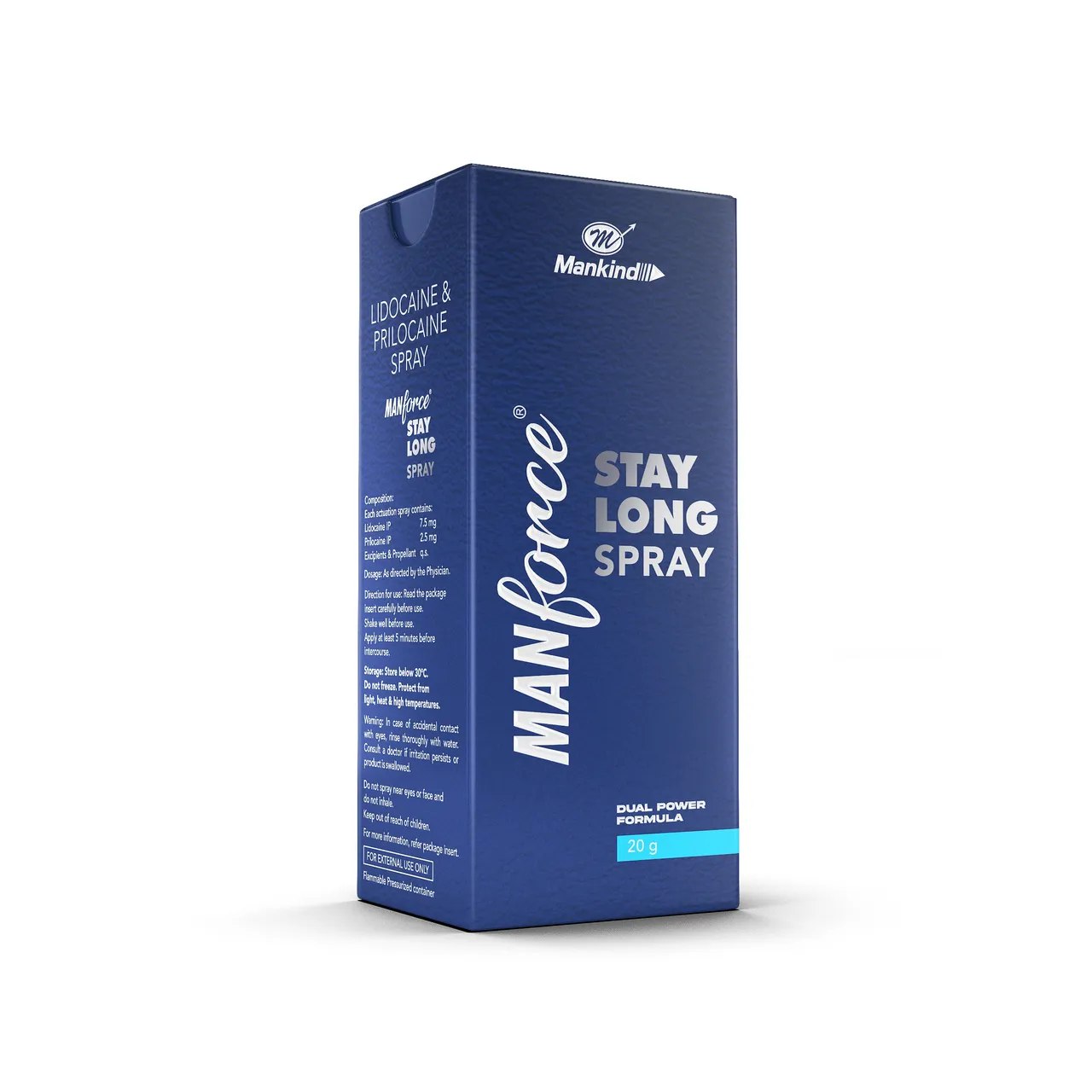
Topical lidocaine or prilocaine, applied to the head and shaft before sex. The evidence is reasonable — these genuinely extend time for many men — but how you use them determines whether they help or ruin the evening, and that part is almost never explained on the packet.
The failure mode is transfer: anaesthetic that stays on the skin numbs your partner too, which is the opposite of helpful.
- Apply 10 to 15 minutes before sex — not immediately before. It needs time to absorb.
- Use the smallest effective amount. More is not better; it just moves you toward numbness.
- Wash off any excess before contact, or wear a condom over it to prevent transfer.
- Test it once on your own first, so you learn your dose before it matters.
- Stop if there's burning, rash or persistent numbness — that's a sensitivity reaction.
Most men worried about this don't have a clinical condition. But three situations genuinely warrant a conversation rather than another purchase.
If it's new. Acquired premature ejaculation — control that was fine and then changed — can accompany thyroid problems, prostatitis, or erectile difficulty where rushing has become a habit. Those are treatable once identified.
If it's lifelong and distressing. Dapoxetine is a short-acting SSRI developed specifically for premature ejaculation and approved in India; other SSRIs are sometimes used off-label. Both are prescription decisions.
If anxiety is driving it. Performance worry impairs control directly and then feeds on the failure. That loop responds well to therapy and poorly to products.
- Start with a doctor — they will have heard this many times and can refer you on.
- Mention any medication you take; several affect ejaculation in both directions.
- Say whether it's lifelong or recently changed — that single detail shapes the whole assessment.
- Be honest about frequency and distress rather than minutes; that's what clinicians actually assess.
📅 A Six-Week Plan That Actually Works
The techniques above fail most often because people try them once. Here's the sequence that doesn't.
🤝 The Conversation Worth Having
One thing that gets skipped: tell her. Not as a confession — as a plan. "I'm working on lasting longer, so I'm going to pause sometimes" turns an awkward stop into something she's part of rather than something that happened to her.
It also removes the anxiety that makes the problem worse. Performance worry directly impairs control, and secrecy is what keeps the worry running. Partners are almost always more understanding about this than men expect — and the pressure men feel here is usually self-generated rather than received.
What to Have on Hand
Products for tonight, while the training does its work in the background. These are deliberately different from the category links further down — this is the working kit, that is the wider range.





Shop by Category





The Short Version
The median is five to six minutes, so most men asking this question are already average. The two things that genuinely change your baseline are stop–start training and pelvic floor exercises, both of which take four to six weeks and neither of which costs anything. Delay condoms and sprays work immediately but modestly — use them while the training takes hold, and apply sprays 10 to 15 minutes beforehand so you don't numb your partner. If control was fine and recently changed, or if it's lifelong and distressing, that's a conversation for a doctor — and dapoxetine exists for exactly this. Tell your partner what you're doing; the secrecy is half the problem.
Explore More Guides
Tailor Position — She Sets the Pace · 20 Woman-Led Positions · Size & Technique · Kissutra — 40 Kisses · Massage Foreplay · Delay Condoms · Love & Intimacy Dictionary · Sexual Health · How-To Guides · Condom Finder Quiz
Frequently Asked Questions
How long is normal?
Studies measuring intravaginal ejaculation latency across thousands of couples put the median at roughly 5 to 6 minutes, with most men falling between 3 and 10. Premature ejaculation is clinically defined as consistently under about a minute (lifelong), or a marked drop from your own previous baseline to around three minutes (acquired) — and in both cases only when it causes distress. Most men who worry about this are not in that range.
What actually works best?
The stop–start technique has the longest track record and the best evidence, and pelvic floor training has genuine trial support behind it. Both take weeks rather than minutes. Delay condoms and sprays work immediately but modestly, and they work better alongside the behavioural techniques than instead of them.
How do I use a delay spray without numbing my partner?
Apply 10 to 15 minutes before sex, use the smallest effective amount, and then either wash off the excess or wear a condom over it. Transfer is the main failure mode — if your partner reports numbness, too much was applied or it wasn't washed off. Test it once on your own first so you learn your dose before it matters.
Do pelvic floor exercises really help men?
Yes — there's trial evidence showing improvement for men with lifelong premature ejaculation. The muscles involved in the ejaculatory reflex are the same ones you'd use to stop urine mid-flow. The catch is that it takes four to six weeks of daily practice, and most men stop at two.
Is there a medication for this in India?
Dapoxetine is a short-acting SSRI developed specifically for premature ejaculation and approved in India; other SSRIs are sometimes prescribed off-label. Both are prescription decisions and need a doctor. Separately, a daily nutraceutical such as Love Light Capsules — a French-developed formula with Tribulus terrestris, maca, fenugreek, L-arginine and zinc — supports general energy and stamina, but it is a wellness supplement rather than a treatment for premature ejaculation.
When is it worth seeing a doctor?
Three situations: if control was fine and recently changed (which can accompany thyroid problems, prostatitis or erectile difficulty), if it's lifelong and causing real distress, or if performance anxiety is driving the cycle. All three are treatable, and a doctor is a perfectly reasonable first stop.
Is delivery from Condombazaar discreet?
Completely. Every order ships in plain, unmarked packaging with sender name CA Gain Healthcare — no product name or brand visible anywhere on the box. Delivering privately across India since 2010.
Related Guides
Was this guide useful? Share it: